

Last Updated: October 25, 2026
Quick Summary
CureMD alternatives for medical billing include software platforms like OmniMD, DrChrono, AdvancedMD, and Tebra, as well as service providers like MI RCM and Medical Billers and Coders that handle your entire revenue cycle. The right choice depends on whether you want to manage billing in-house with software or outsource it entirely to a service provider.
- OmniMD offers 30+ specialty-specific templates for EHR, practice management, and billing in one platform.
- MI RCM provides full-service revenue cycle management across 25+ specialties with a 99% first-pass claims rate.
- Software platforms require your staff to manage claims, denials, and follow-up; service providers handle the entire revenue cycle for you.
- Key evaluation factors include denial management capability, accounts receivable follow-up responsiveness, and specialty expertise.
- Transition planning, integration with your existing EHR, and clear pricing are critical questions before switching billing partners.
Table of Contents
- Why Practices Look Beyond CureMD for Medical Billing
- Medical Billing Software vs. Billing Services: What’s the Real Difference
- Top CureMD Alternatives: Medical Billing Company Comparison
- Medical Billing Denial Management: A Critical Factor in Your Choice
- Medical Billing Accounts Receivable Follow-Up: What to Expect
- Making Your Switch: Key Questions Before You Change Billing Partners
- Frequently Asked Questions
Why Practices Look Beyond CureMD for Medical Billing
When you’re managing a medical practice, switching billing systems is never a casual decision. You’ve already trained your staff on CureMD. Your workflows are built around it. Your team knows where to find things. So the fact that many practices are exploring CureMD alternatives for medical billing tells you something important: the status quo isn’t working for them anymore. (Source: the Centers for Medicare & Medicaid Services (CMS))

The reasons vary. Some practices outgrow what CureMD offers. Others find the interface clunky or the support frustrating. Some hit walls with integration, specialty-specific workflows, or denial management. A few discover that their money could be better spent elsewhere.
If you’re in that boat, you’re not alone. Practices of all sizes, from solo practitioners to multi-specialty groups, are asking the same question: what else is out there? And more importantly, is it actually better?

This guide walks you through your real options. We’ll break down the difference between software and services, show you what’s available, and help you think through what matters most for your practice. Our team at MI RCM has spent over 19 years helping healthcare providers solve billing problems, so we understand both the software side and the service side of this equation.
Medical Billing Software vs. Billing Services: What’s the Real Difference
Before you start comparing specific platforms, you need to understand a fundamental split in how billing gets done: you can buy software or you can buy a service. They solve different problems.
Medical billing software is a tool you run in-house. You own the platform, your team uses it daily, and you’re responsible for everything it does. OmniMD, DrChrono, AdvancedMD, and Tebra all fall into this category. You submit claims yourself. You follow up on denials.
Billing services are different. You hand off the entire revenue cycle to an external team. They submit claims, follow up on unpaid accounts, manage denials, post payments, handle credentialing, the whole thing.
The choice isn’t about which is objectively better. It’s about what you need.
Software makes sense if you have the staff to run it, you want direct control, and you’re comfortable with the ongoing learning curve.
Many practices don’t realize they’re comparing apples to oranges. You can’t fairly measure a software platform against a service company because they’re solving different problems. A software tool can be excellent and still leave you overwhelmed if you don’t have the bandwidth to use it well.
Top CureMD Alternatives: Medical Billing Company Comparison
If you’re serious about exploring your options, here’s what’s actually available. We’ve included both software platforms and service providers so you can see the full landscape.
Platform-Based Options: OmniMD, DrChrono, AdvancedMD, and Tebra
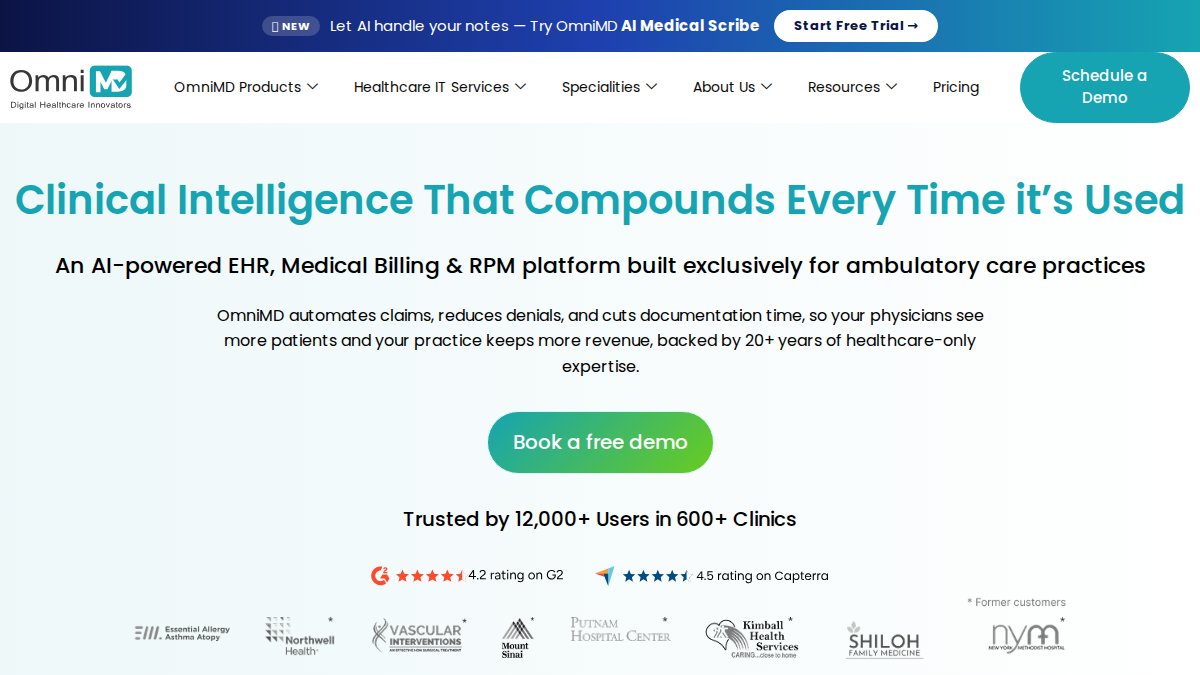
OmniMD brings together electronic health records, practice management, and billing in one platform. It’s built with specialty-specific templates, close to 30 of them, so whether you’re running a dermatology practice or a behavioral health clinic, there’s a workflow designed for you. The billing module handles claims submission and processing, and you get scheduling and e-prescribing built in.
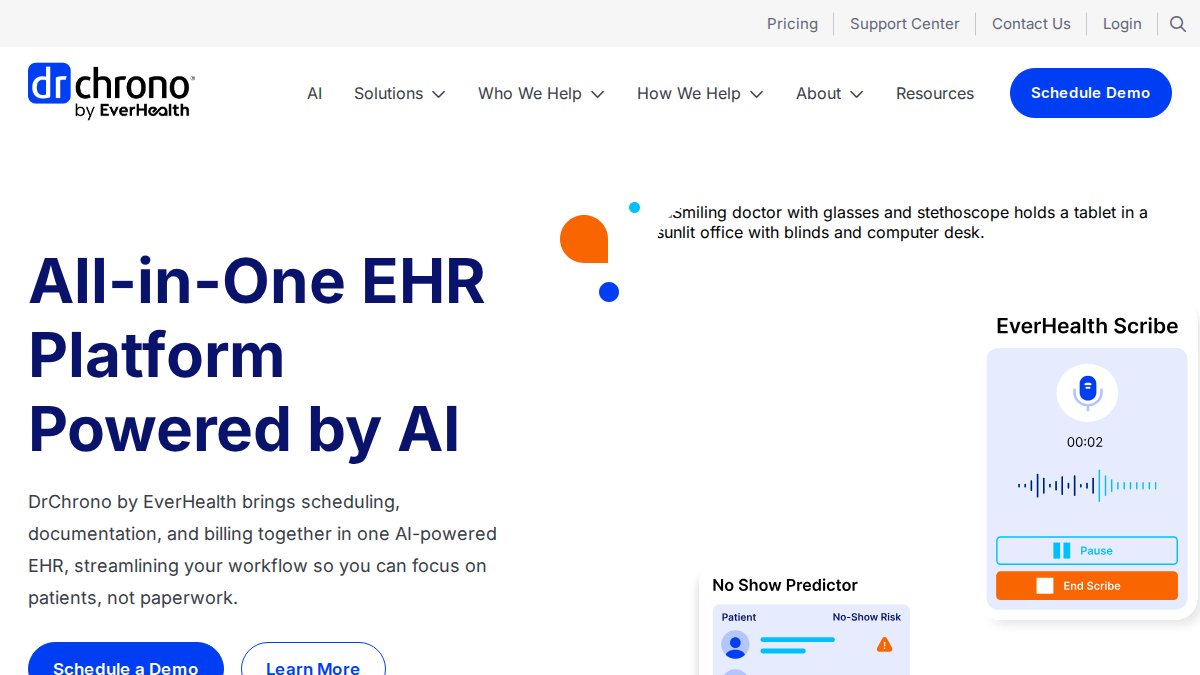
DrChrono is a cloud-based platform that combines EHR, practice management, and medical billing. Because it’s cloud-based, your team can access it from anywhere, which matters if you have multiple locations or remote staff. The platform handles claims submission and integrates with major payers.
AdvancedMD is an established medical billing and practice management platform. It’s been around long enough that many practices know it or have used it before. It handles the full range of billing workflows, claims submission, denial management, payment posting, accounts receivable follow-up. If you’re already familiar with this type of platform, the transition might feel less disruptive.
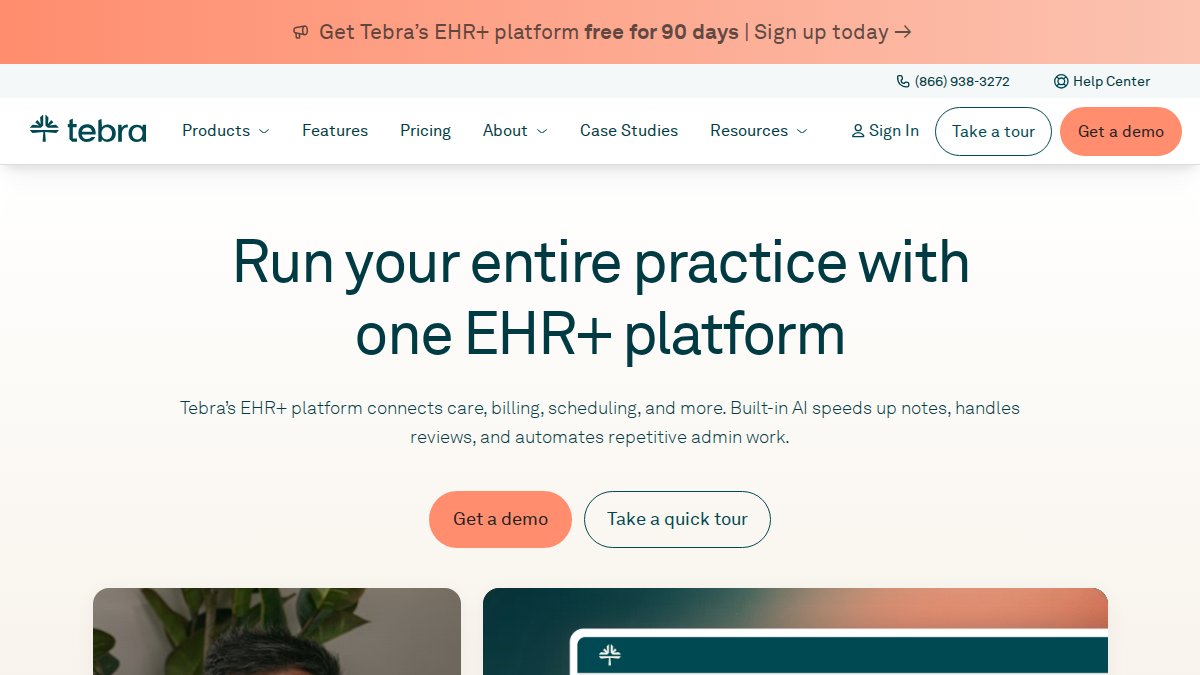
Tebra, formerly known as Kareo and PatientPop, is another cloud-based EHR and billing option. It’s designed to be user-friendly, especially for smaller practices. The platform handles billing, scheduling, and patient engagement. Because it’s cloud-based, updates happen automatically and you don’t have to worry about maintaining servers.
Service-Based Alternatives: When Outsourcing Makes Sense
If you’re considering handing off your billing entirely, you have real options beyond CureMD’s own services. Learn more about outsourced medical billing for small practices to understand whether this approach fits your situation.
MI RCM provides full-service revenue cycle management for healthcare practices across 25+ specialties and all 50 states. We take care of the revenue cycle. How to Improve Medical Billing Revenue Cycle covers the broader strategies that shape our work.
Medical Billers and Coders is another service provider that handles medical billing for practices. Like any service company, the quality of your experience depends on how responsive they are and how well they understand your specialty and payer mix.
athenahealth and CareCloud also offer billing services alongside their software platforms. Both combine technology with managed services, so you get some automation but also dedicated support.
The practical difference between these options comes down to responsiveness, specialty expertise, and how invested they are in your success.

Here’s a breakdown of the main billing platforms and service providers available to practices looking beyond CureMD.
| Option | Type | Key Features |
|---|---|---|
| OmniMD | Software Platform | EHR, practice management, billing with 30+ specialty templates |
| DrChrono | Software Platform | Cloud-based EHR, practice management, billing, multi-location access |
| AdvancedMD | Software Platform | Established platform handling claims, denials, AR follow-up, payment posting |
| Tebra | Software Platform | Cloud-based EHR, billing, scheduling, patient engagement, automatic updates |
| MI RCM | Service Provider | Full revenue cycle management across 25+ specialties, 99% first-pass rate |
| Medical Billers and Coders | Service Provider | Full medical billing and revenue cycle management services |
| athenahealth | Hybrid | Billing services combined with software platform and managed services |
| CareCloud | Hybrid | Billing services combined with software platform and managed services |
Medical Billing Denial Management: A Critical Factor in Your Choice
Here’s what most practices don’t talk about until it’s too late: the platform or service you choose has to actually reduce your denials. Not eventually. Not in theory. Now.
Let’s Talk About Your Billing →
Denials are money leaving your practice. Every claim that comes back denied is time your staff spends reworking it, resubmitting it, and following up on it. That’s hours you’re not spending on anything else. More importantly, it’s revenue delayed or lost.
When you’re evaluating software or a service provider, ask specifically how they handle denial management. What’s their process? Do they analyze why claims are being denied and fix the root causes, or do they just resubmit and hope? Do they have relationships with your payers that help them resolve denials faster?
A good denial management process looks like this: claims come back denied, the team analyzes the denial code, determines if it’s a coding issue, a missing document, a payer-specific rule, or something else, and then fixes it before resubmitting. The best providers track denial patterns and flag systemic issues so you’re not making the same mistake repeatedly.
Software platforms can help you track denials and organize the workflow, but they can’t fix the underlying problems. A service provider like MI RCM can do both: we use technology to organize the work, but we also have the expertise to actually solve the denial problem. How to Lower Claim Denial Rates goes deeper into the strategies that work.
Medical Billing Accounts Receivable Follow-Up: What to Expect
Your accounts receivable, the money owed to you that hasn’t been collected yet, is a direct reflection of your billing operation. If it’s growing, something’s wrong. If it’s shrinking, something’s working.
When you’re comparing billing options, pay attention to how they handle follow-up. This is where the difference between software and service really shows up.
Software gives you tools. You can track aging accounts, generate reports, see which claims are pending, and set reminders. But your staff still has to do the work. They have to call payers, track down missing documents, resubmit claims, and post payments.
A billing service handles the follow-up for you. That means someone is actually calling payers on your behalf, negotiating with them when needed, tracking down missing documentation, and pushing claims through to resolution. It’s not automated. It’s work.
The quality of that work matters enormously. A service provider who knows your payers and has relationships with them can often resolve issues faster than your in-house staff can.
When you’re evaluating a service provider, ask about their average days in accounts receivable. Ask how they prioritize follow-up. Ask what their process is for claims that have been pending for 60+ days.
Making Your Switch: Key Questions Before You Change Billing Partners
If you’ve decided to explore alternatives, here are the questions that actually matter. Don’t settle for vague answers.
1. How do you handle my specialty? Not all practices are the same. Behavioral health has different payer requirements than orthopedics.
2. What’s your denial rate, and how do you measure it? If they won’t tell you, that’s a red flag.
3. What happens during the transition? Switching billing systems is disruptive. Your staff needs training. Your data needs to migrate. Claims that are in-flight need to be tracked.
4. How responsive are you? This matters more than you think. When your office manager has a question, how fast do they get an answer?
5. What’s included and what’s not? Some providers include credentialing and compliance audits. Others don’t. Some handle eligibility verification. Others charge extra for it.
6. How do you integrate with my EHR? If you’re keeping your existing EHR, you need the billing system or service to talk to it.
Switching billing partners is a real decision. You’re not just changing software, you’re changing how your revenue cycle works.
If you’re ready to talk through your options, we’re here. At MI RCM, we’ve worked with practices across every specialty and situation.
Frequently Asked Questions
What should a medical practice look for in a CureMD alternative?
Look for a solution that handles your specialty’s specific billing rules and payer requirements. Check whether denial management and accounts receivable follow-up are included or outsourced. Consider ease of integration with your existing EHR, the vendor’s responsiveness to support issues, and whether pricing is transparent and scales with your practice size. Ask about their first-pass claims rate and how they measure billing accuracy. A good alternative should reduce your administrative burden, not add to it.
How do medical billing services compare with billing software?
Billing software gives you control and visibility but requires your staff to manage workflows, denials, and follow-up. Billing services handle those tasks for you, freeing your team to focus on patient care. Software works best if you have dedicated billing staff and want hands-on control. Services work better if you’re understaffed, have high turnover, or want expert management of your revenue cycle. Many practices benefit from a hybrid: software for day-to-day entry and a service partner for denial management and credentialing.
Can a medical billing company work with an existing EHR?
Yes, most billing services integrate with major EHR platforms through direct connections or data feeds. Before switching, confirm that your chosen billing partner has documented integration with your EHR. Ask about data migration, how claims flow from your system to theirs, and what happens if your EHR updates. Some services use manual data entry or batch uploads, which can slow claims processing. Direct integration typically means faster claim submission and fewer errors.
What questions should a practice ask before switching medical billing providers?
Ask about their experience with your specialty and practice size. Request their first-pass claims rate and average days to reimbursement. Clarify what’s included in their service: denial management, credentialing, compliance audits, payment posting, and accounts receivable follow-up. Ask how they handle staff transitions and whether they’ll train your team. Request references from practices similar to yours. Understand their pricing model and contract terms. Finally, ask how responsive they are to issues and what your point of contact looks like.
